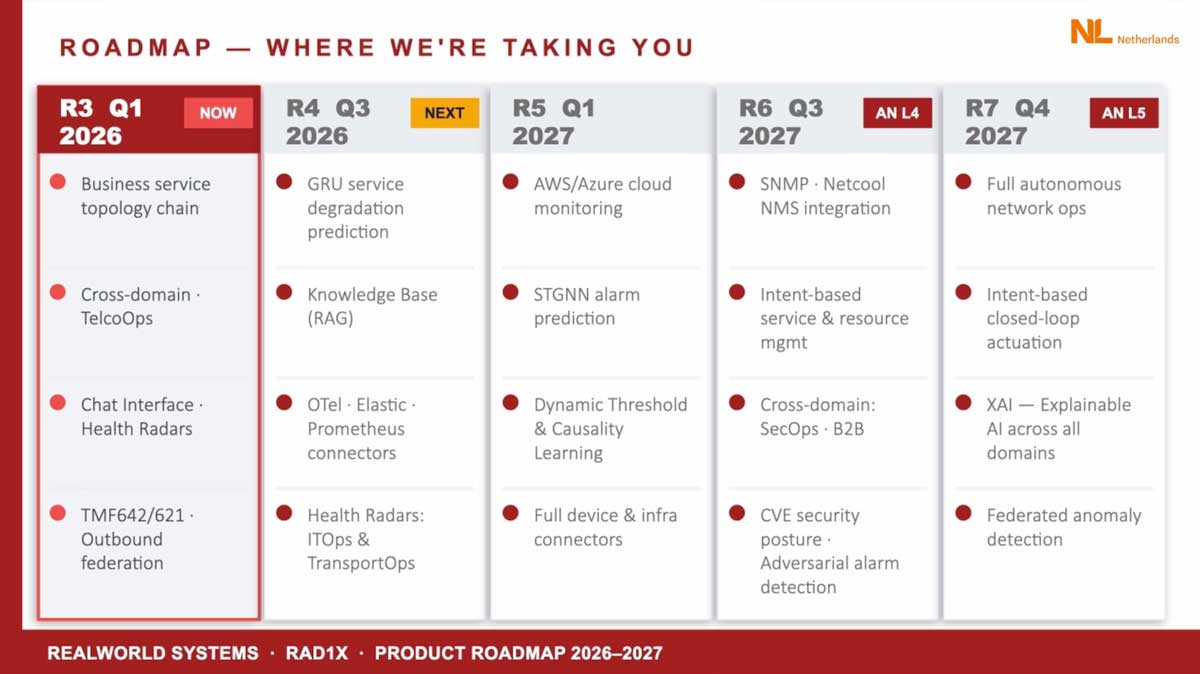

At the Netherlands Pavilion during Mobile World Congress Barcelona 2026, RealWorld Systems presented its new observability platform, Radix One, aimed at improving root cause analysis and operational efficiency in telecom networks.
During an NL Talks session moderated by Anke Kuipers, Ioana Dragus outlined how increasing network complexity and rising volumes of alarms are driving demand for more advanced, AI-driven monitoring tools.
Addressing root cause detection challenges
Dragus noted that network operations teams are often overwhelmed by large volumes of alerts, while identifying the actual root cause of incidents remains time-consuming.
“Up to 73 percent of incident resolution time is spent identifying the problem rather than fixing it,” she said, highlighting a key inefficiency in current operations.
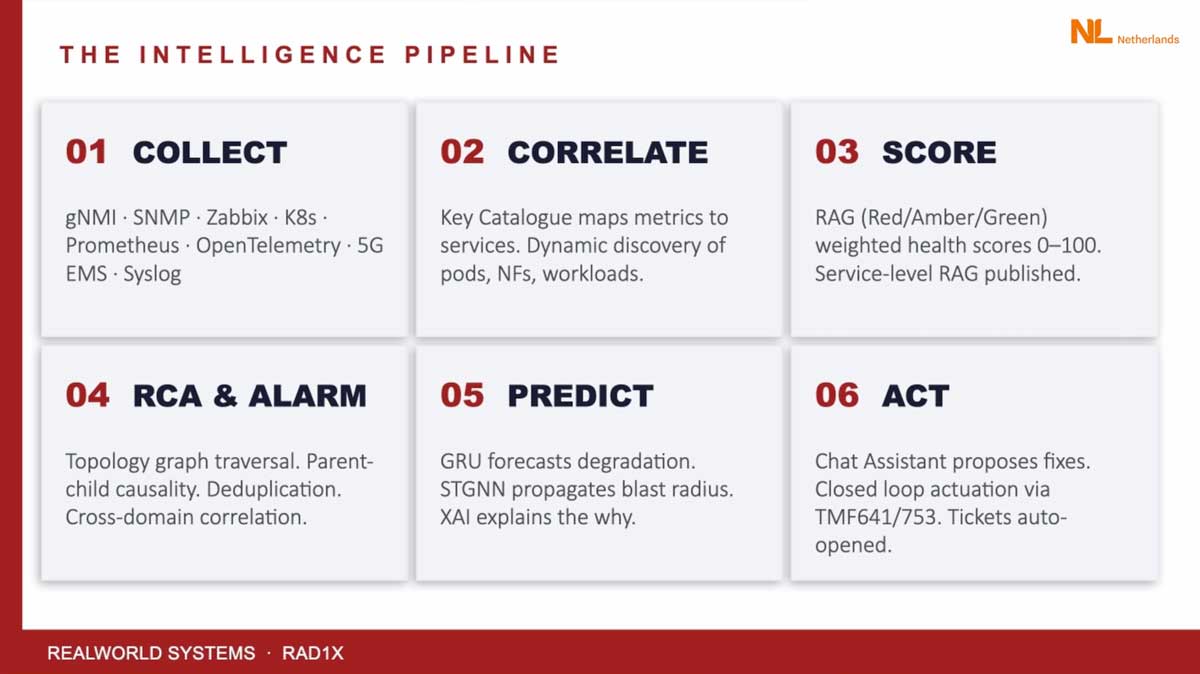
Radix One is designed to address this issue by ingesting large volumes of network data, including events and metrics, and correlating them across domains to pinpoint the underlying cause of faults.
AI-native platform with cross-domain visibility
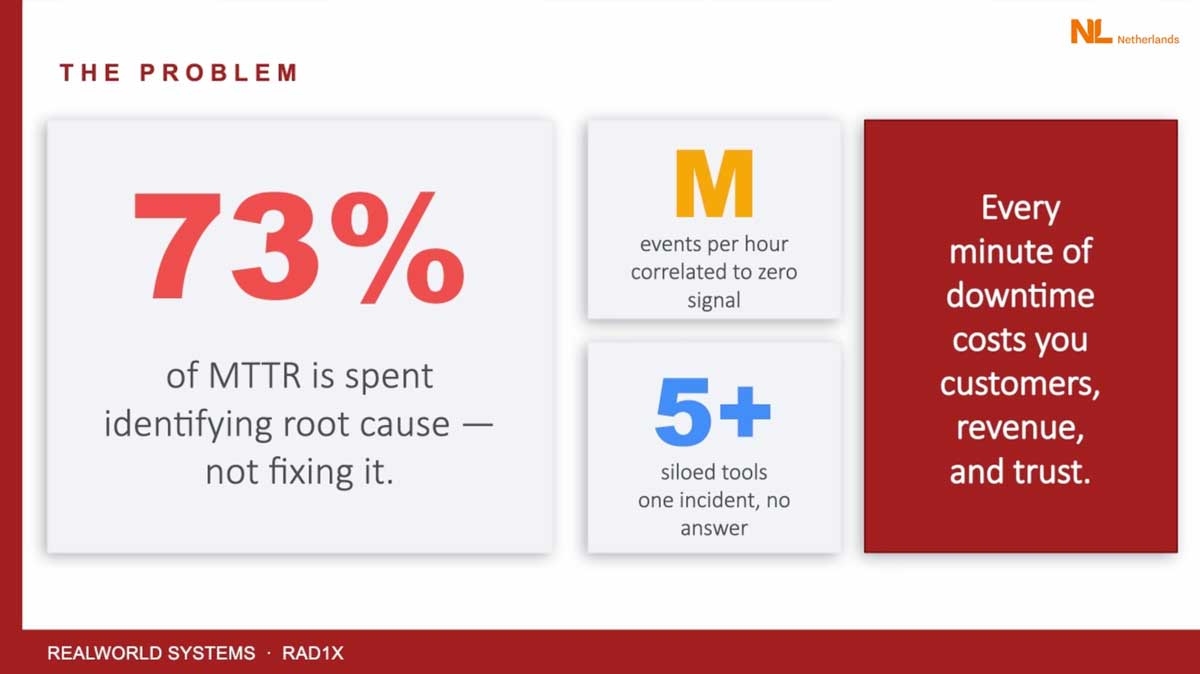
The platform uses an AI-native, modular and stateless architecture to monitor multiple layers of telecom environments, including network, IT and cloud domains.
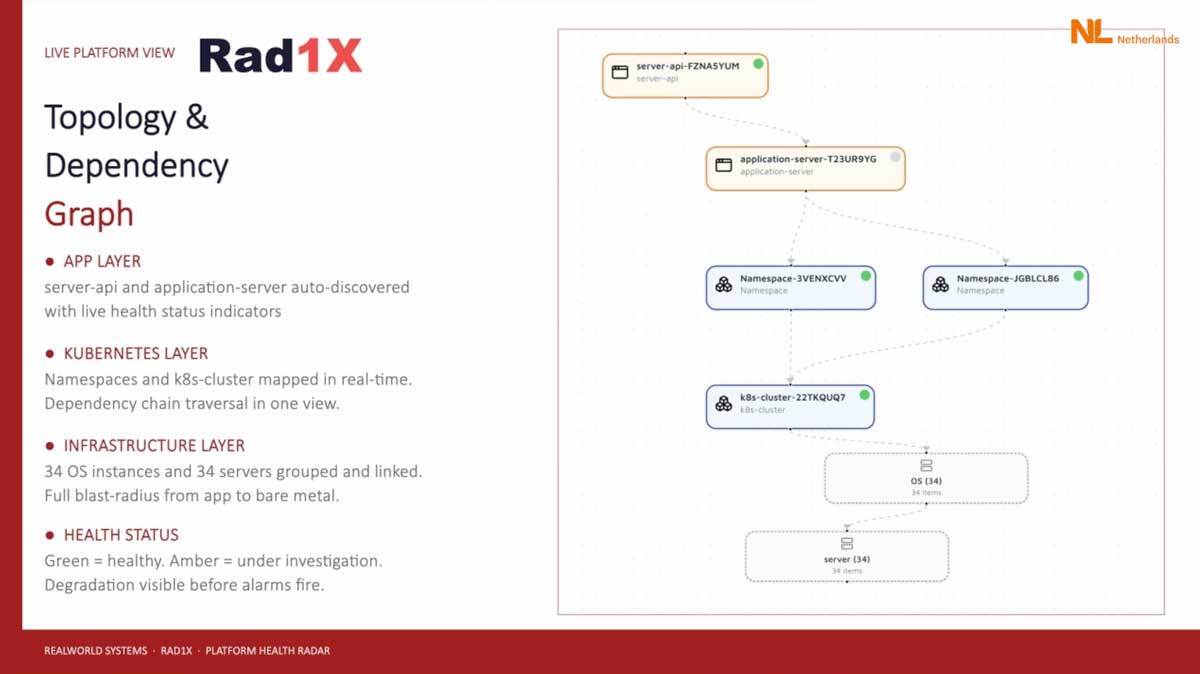
A central concept in Radix One is the use of so-called “health radars” across different domains. These components exchange data to provide end-to-end visibility and map the chain of impact when incidents occur.
This approach enables operators to understand not only where a fault originates, but also how it affects services, customers and service-level agreements (SLAs), including enterprise services.
Predictive analytics and explainable AI
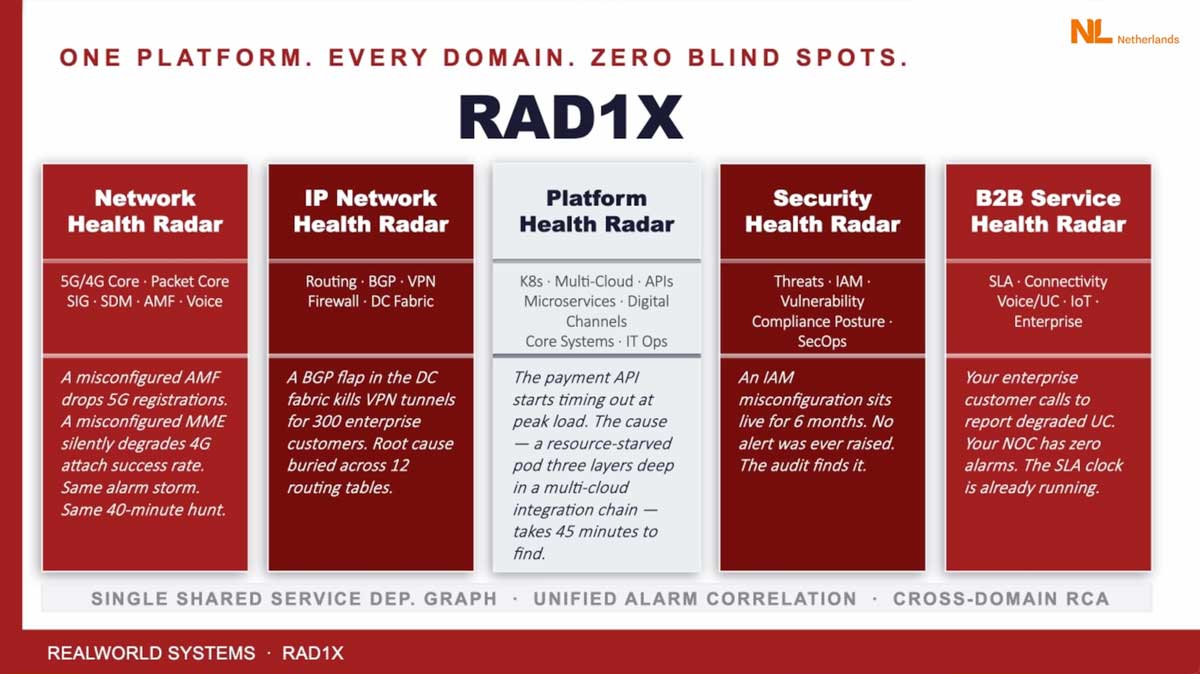
Radix One integrates multiple AI models to support both real-time analysis and predictive capabilities. These include forecasting techniques and graph-based algorithms to identify dependencies and anticipate potential failures.
The platform also incorporates explainable AI features, allowing engineers to understand how conclusions are reached, an increasingly important requirement for operational trust and regulatory compliance.
In addition, a built-in assistant provides insights in natural language, while a knowledge base can integrate runbooks and troubleshooting documentation to suggest potential fixes.
Integration and deployment
According to Dragus, deployment is simplified through the use of standard protocol-based connectors, enabling integration with both legacy and modern systems without lengthy implementation cycles.
“Integration can be done in around a month, as we rely on widely used protocols rather than proprietary interfaces,” she said.
The platform supports both cloud and on-premises deployment models, addressing growing demand for data sovereignty and flexible infrastructure strategies among telecom operators.
Supporting autonomous network evolution
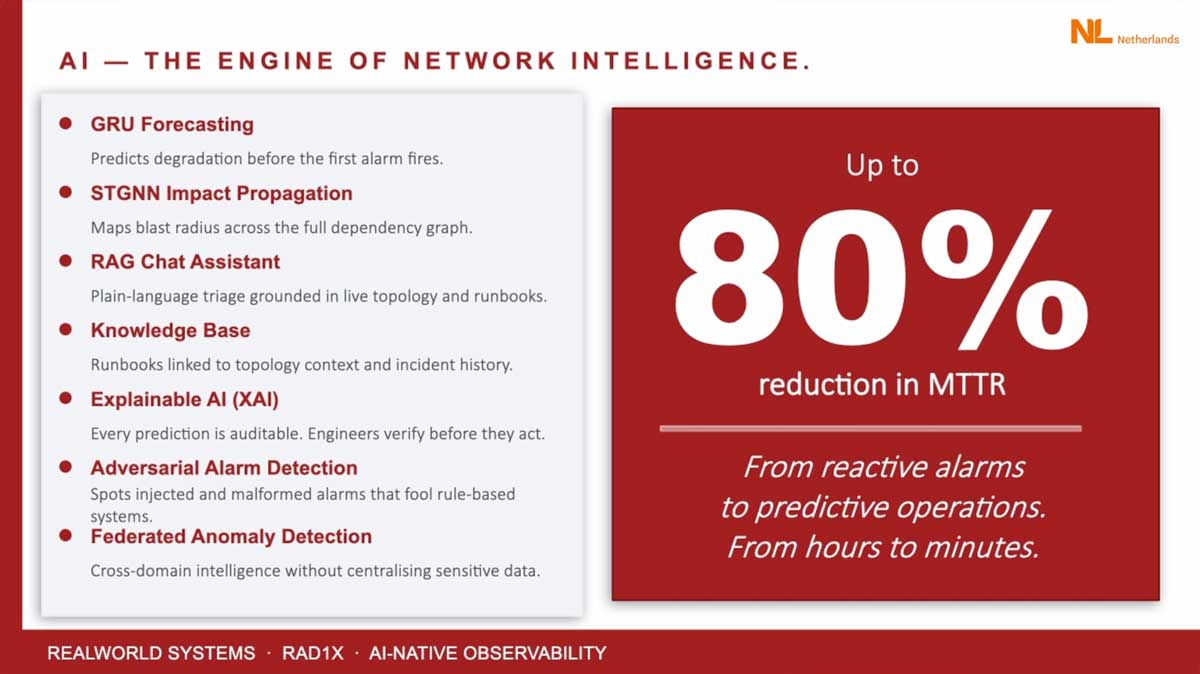
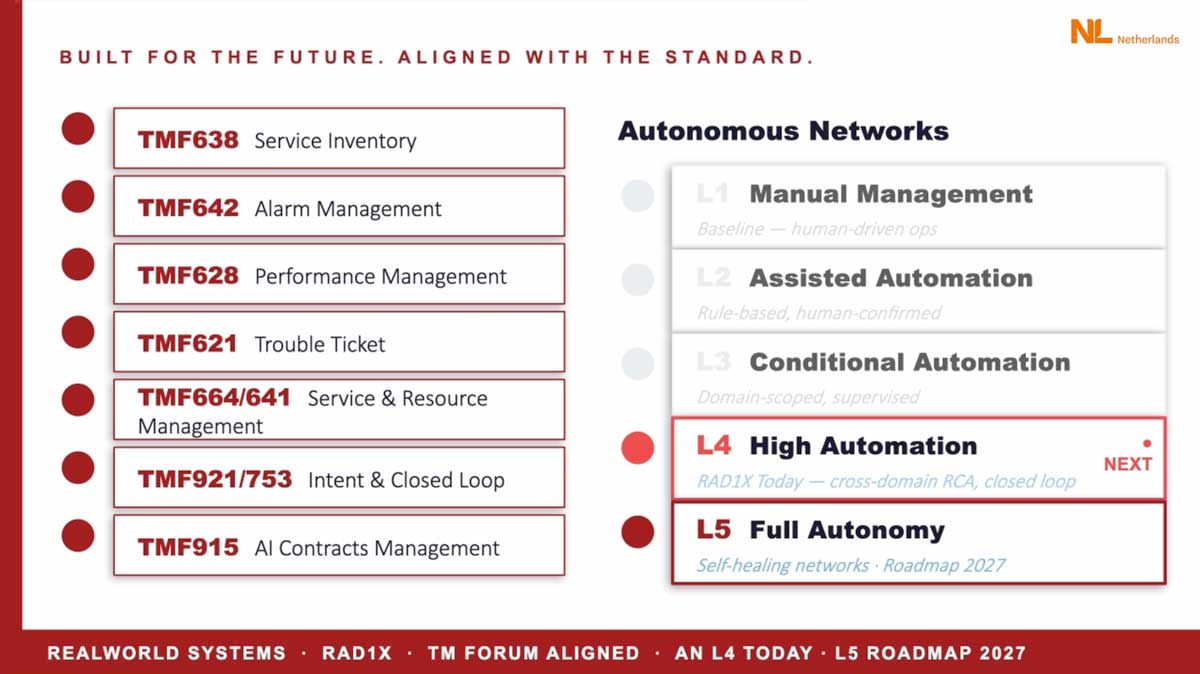
Radix One is aligned with the TM Forum framework for autonomous networks, with current capabilities targeting Level 4 automation, including closed-loop operations and intent-based management.
RealWorld Systems aims to further expand the platform with additional AI-driven features, cloud monitoring capabilities and enhanced security functions, including federated anomaly detection and vulnerability management.
The company is targeting Level 5 autonomous networks by 2027.
Focus on bridging network and IT operations
A key use case for Radix One is bridging the gap between network operations and IT systems, an area where operators have historically faced challenges.
Dragus noted that issues are often passed between teams, particularly in complex service environments involving APIs and enterprise customers.
By correlating data across domains, the platform aims to provide a unified view of service performance and accelerate issue resolution in both network and IT environments.
Market positioning
RealWorld Systems brings more than 30 years of experience in OSS/BSS integration and has participated in multiple European research initiatives focused on next-generation telecom technologies.
The launch of Radix One marks its latest step in applying AI to practical operational challenges, as operators prepare for more advanced automation and future network generations.