
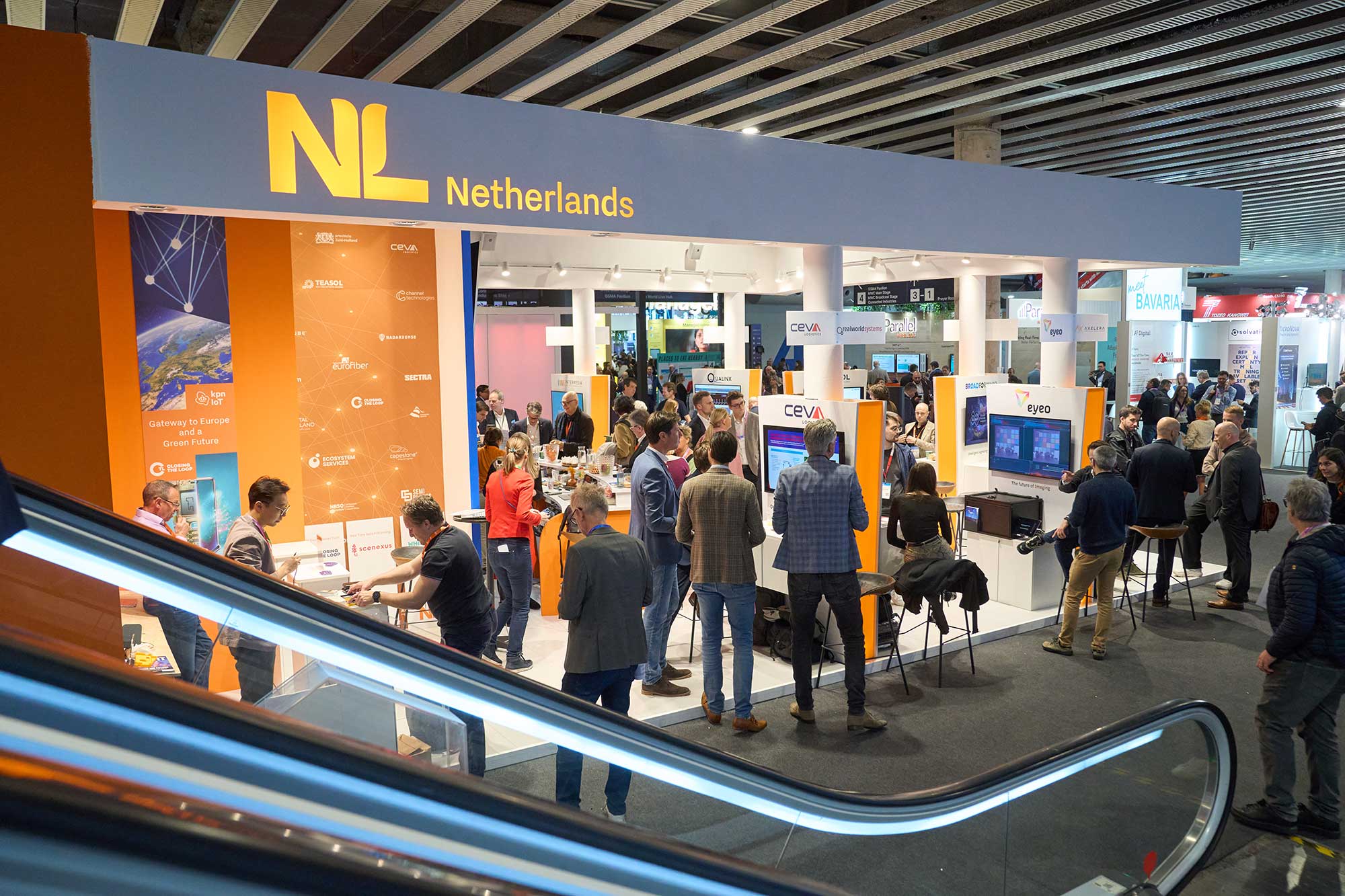
During MWC, Ecosystem Services and UlWiMo (PRIMMA) organise – as part of the Netherlands program – on Wednesday and Thursday (March 4 – March 5) guided knowledge mission tours aimed at connecting participants with leading Dutch and international companies in private wireless networks.
Wednesday, March 4
Wednesday, March 4 was day 1 of the Private networking tour in MWC 2026 and has led the participants of the tour to Viavi in the first stop.
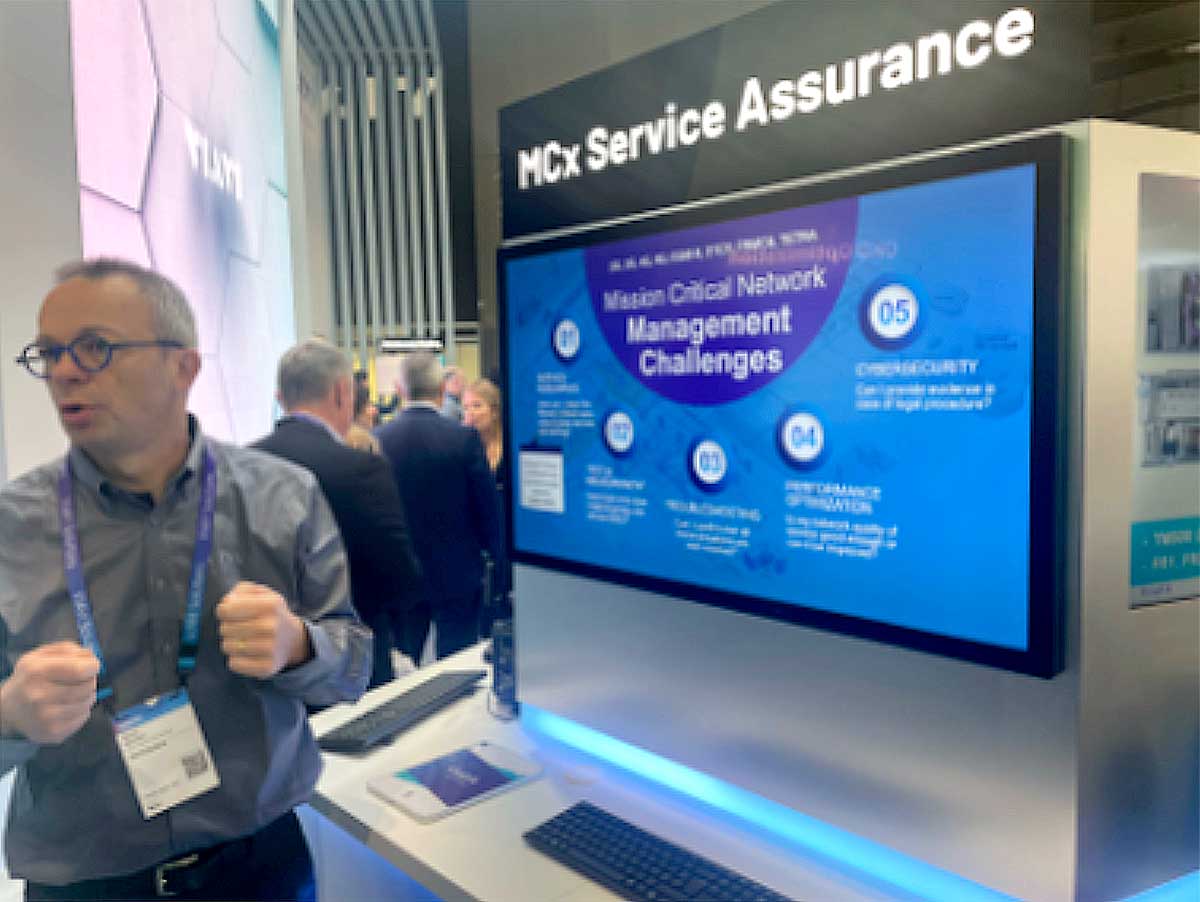
Viavi
Viavi presented their Quality of Services monitoring tooling for critical network services (f.i. voice). It showed a complete portfolio and the focus on end-user experience monitoring was very detailed as it is based on their reputation in the Telecom Operator market.
NL talk of Eurofiber and Teasol
The next stop was on the Netherlands Pavilion with the NL talk of Eurofiber and Teasol. The Eurofiber NL talk showed a deep insight into the Dutch Private Network market with developments in spectrum availability, customer demand and needs and how to develop the market for Mobile Private Networks in cooperation with NTT Data and Greenet. Also attention was given to the introduction of RedCap with Nokia: Reduced Capability) is a 5G technology that was developed for IoT use cases that do not require the full performance of 5G.
On top Teasol delivered a good overview of their offering to the Mobile Network operators and their dynamic market place for remaining capacity in the telecom networks.
Frontier / Peplink
At the Frontier / Peplink booth there was a good overview from developments in the User Equipment market. On the one hand the portfolio showed more powerful 5G dongles with support for high level of carrier aggregation to reach high speed connections. On the other hand the new devices are more integrated: 1) integration for multiple 5G modems to reach even higher bandwidth over wireless networks and 2) Integration with Starlink to enable better operation of the satellite modem and full integration of the power supply towards all the equipment in the enclosure. Ruggedised design and build quality is common for all devices.
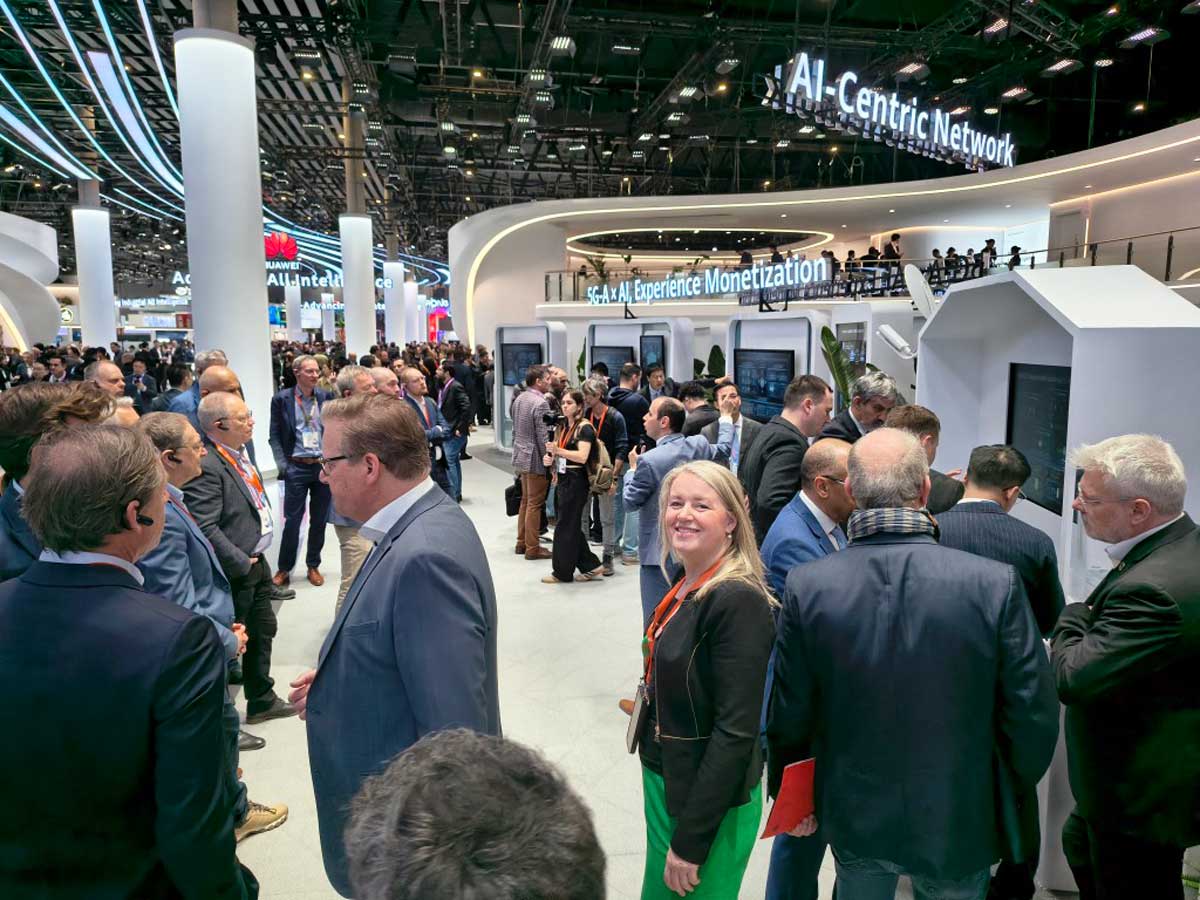
Huawei
As every year Huawei impressed us with their booth and the display of innovations that make the telecom operator networks even more powerful and more sustainable. The integration of multiple frequency bands in combination with active antenna technology was impressive to see. On the sustainability side the deep sleep technology with only 10 watts usage was combined with the higher usage of Green energy through the use of new materials and intelligent battery management of the local energy storage.
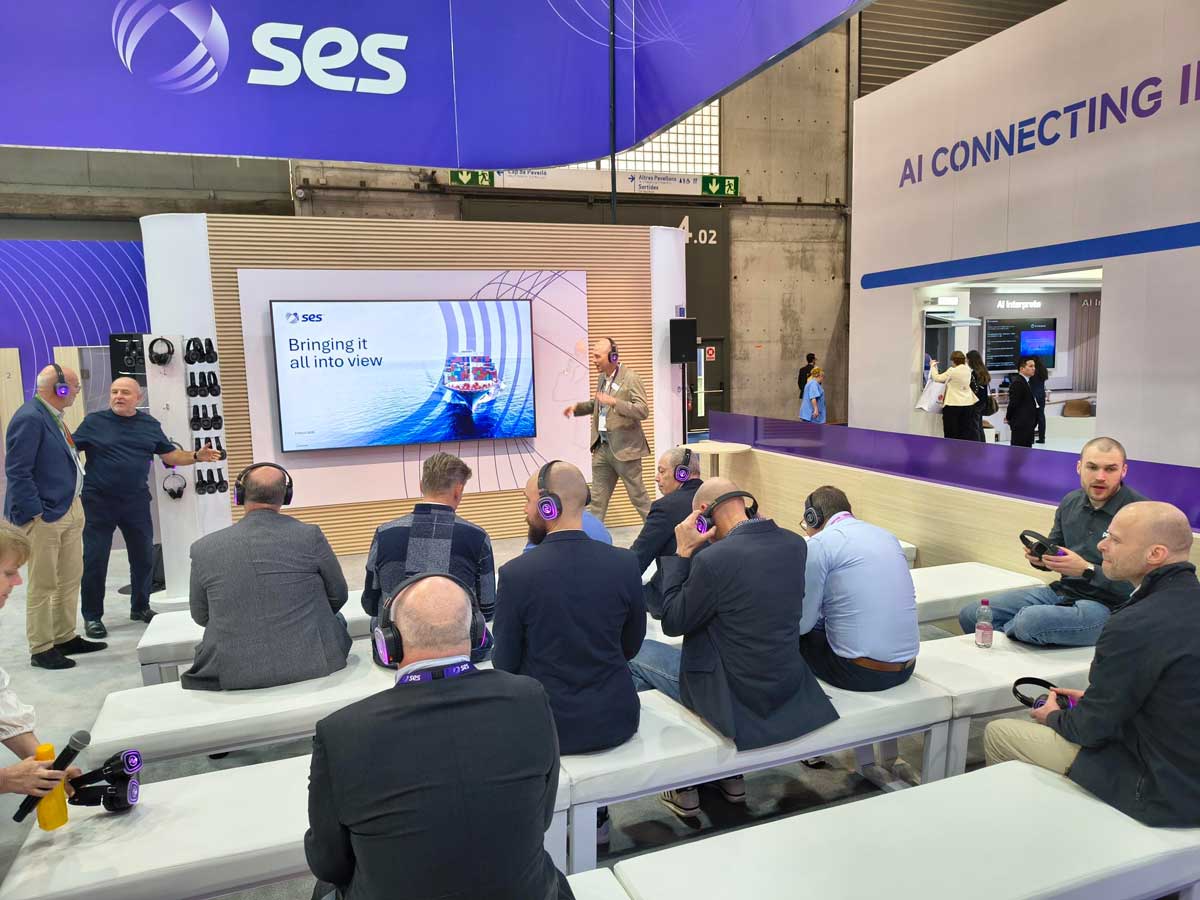
SES
After the lunch we visited SES that gave us an impressive insight into the developments in Satellite networks with their multi-orbit approach, combining LEO (low earth orbit), MEO (middle earth) and GEO (geostationary) satellites. As in 2025, a special session was organised in cooperation with CENS (connectivity ecosystem North Sea) to update on maritime/sea connectivity from satellites.
The highlight was the introduction of the Lync offering that offers limitless coverage with roaming capabilities when a device gets out of reach from the regular telecom networks on earth.
NTT Data
At NTT Data – as system integrator we have seen strong innovations in applications to enable companies to improve their efficiency and services with the usage of digital tools and connectivity. They made clear that these innovations have a strong influence on the economic benefits and competitive edge of a company.
Ericsson
The Ericsson booth showed very interesting use cases of Private 5G Networks and you can see that their focus is now also to cover this market development. The Dual use of network technology has also been explained to enable for instance drone detection with a wireless network. On the technology side the demo of Multi-Radio Spectrum Sharing was impressive to see in the live demonstration. With this technology, 6G can be introduced next to 5G in the same frequency band in a very efficient way with little overhead.
GSMA Panel Discussion
To close off the day we visited the GSMA Panel discussion that gave an interesting insight into the current market development and lessons learned in 5G Private network deployments. We recommend reading the following whitepaper. You can access it via the button below.
Thursday, March 5
The PRIMMA programme aims at accelerating the use and deployment of private mobile networks in industry, notably in (air)ports and logistics and transportation. During MWC (Mobile World Conference) 2026 in Barcelona we organised a dedicated excursions outside of the exhibition ground to the port of Barcelona. There we witnessed live deployment of private 5G and operational use of mobile networks. We visited:
- The port of Barcelona Authority
- The container terminal called BEST (Barcelona Europe South Terminal)
For participants in the PRIMMA programme we provide a summary of the visits. The report is not intended for wider circulation.
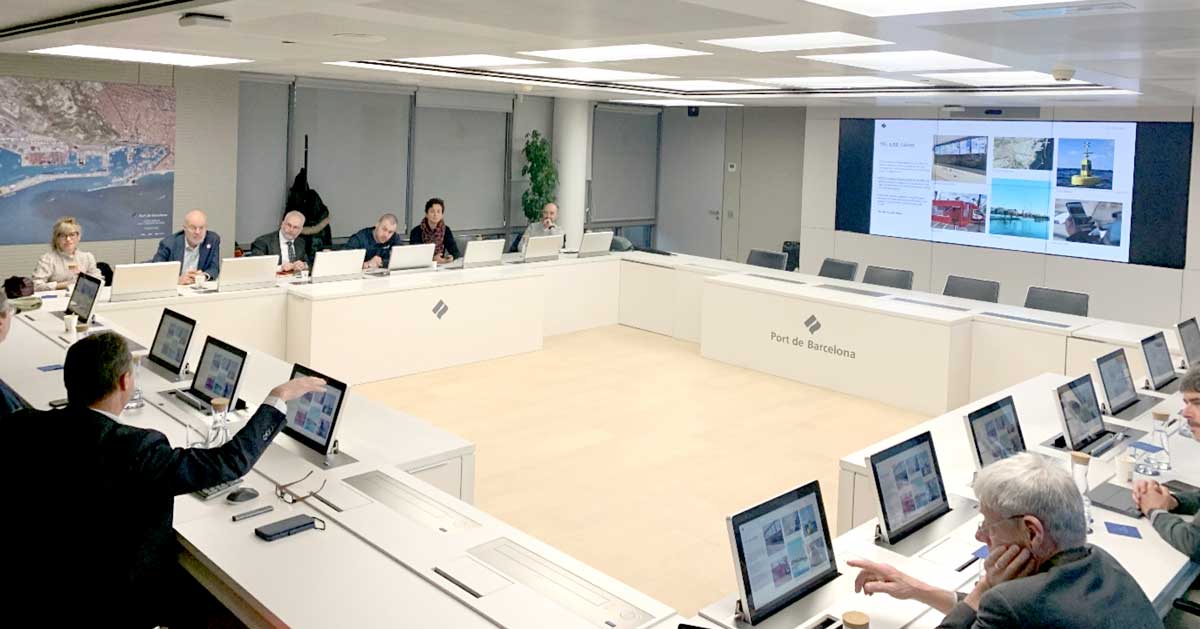
Barcelona port authority
The port authority received our group with Carles Rua, innovation manager and David Serral – CIO. We got presentation on the strategic direction of the port and on the 5G network they have recently deployed.
Port Position
The port is one of the three biggest in Spain, together with Algeciras and Valencia. Depending on how and what you count either one can call itself the nr 1 biggest in Spain. Barcelona is a mixed port with container terminals (APM and BEST ), cruise ship terminal, finished cars transportation, warehousing and logistics and bulk. It does not have significant (petro)chemical industry like for instance Rotterdam. The port is on the doorstep of the old town. Under environmental pressure the port is relocating some of the more industrial users who are lose to town to the more remote, southern areas.
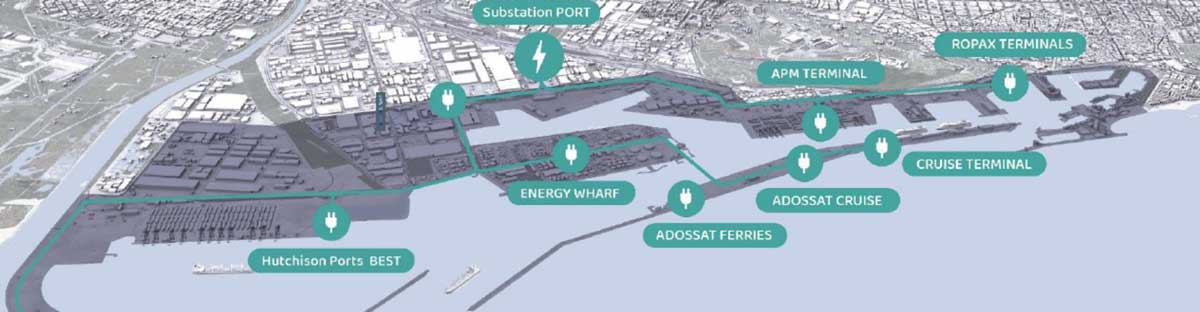
One of the strategic directions of the port is decarbonisation, Electrification and technology development. In order to stimulate development, the port has established Blue Tech Port; an eco-system of startups, providers, research institutes jointly developing novel technology inside of the port.
Private 5G in the port
Traditionally the port authority caters for the lease of land to users and for infrastructure, from roads and rail to fibre. Unlike some other ports, this PA also saw it as its mission to provide its tenants with up-to-date mobile coverage to facilitate operational automation and port innovation. It drafted a tender for private 5G coverage of the entire port area and as a result Orange Spain now provides private 5G coverage under an SLA (Service Level Agreement). It is worth noting that the PA got itself a service, not a network and the operator provides the spectrum as well. This is due to the spectrum situation in Spain where private parties can not obtain access to shared spectrum yet as they can in some other EU countries. Probably this will change under the EU directive to harmonise 3.8-4.2 Ghz for private shared usage. As a result of the spectrum constraint the tender was virtually restricted to mobile operators, who possess spectrum.
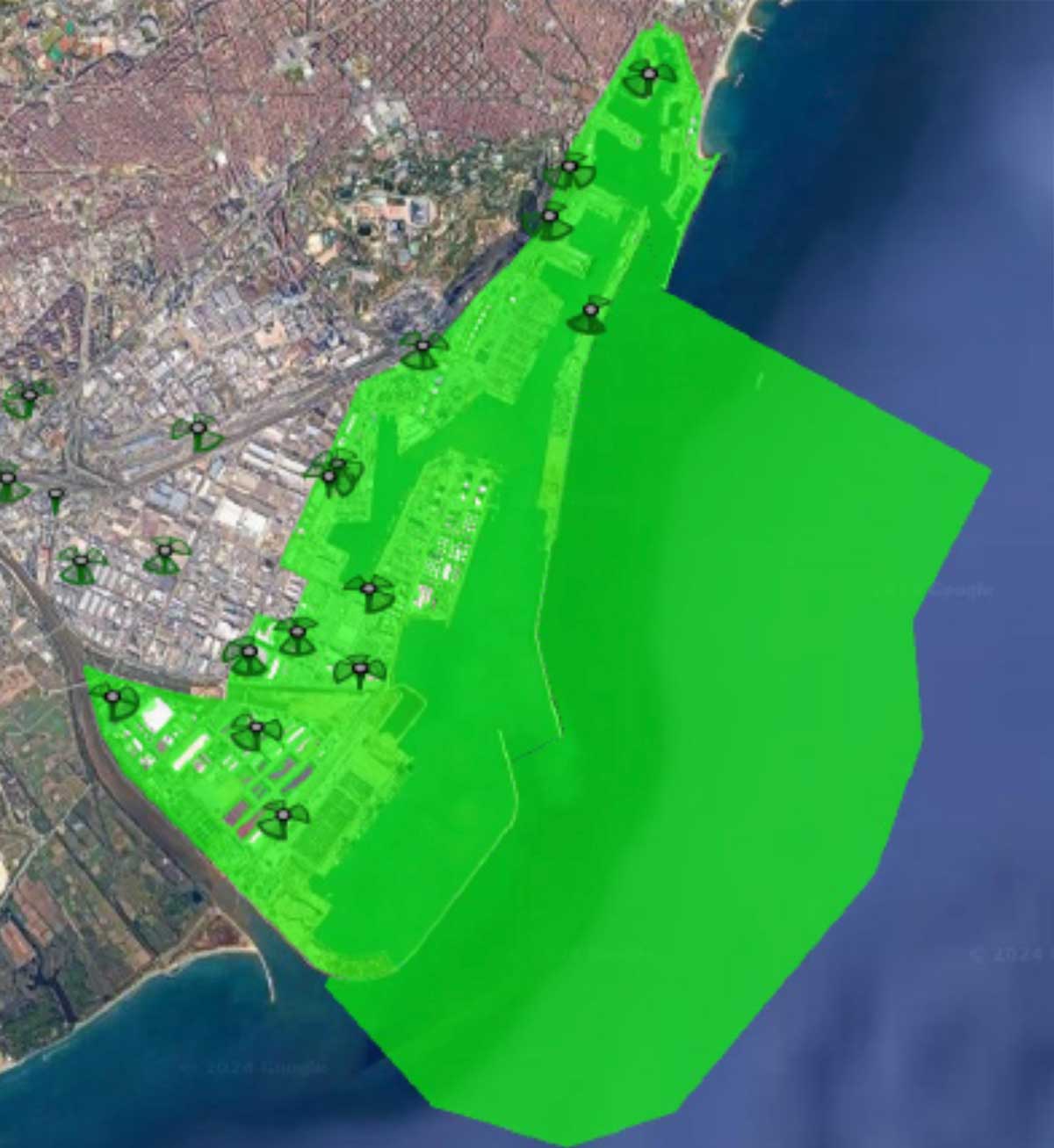
The network went operational in 2024, so recently. The port authority uses it herself (pilots, customs, police, traffic control, drones, environmental sensoring, digital twins etc) and so do some port tenants incl BEST container terminal. Their SLA guarantees certain levels of throughput, user densities and latency that are to be met under the contract by Orange. The provider also catered for mast and fibre interconnects; even though the port herself has those on its terrain. Under its operating licence – like many PA’s, they are public entities – it is not allowed to use its facilities for one designated player only.
With 20 masts the network obtains full coverage of the port area.
One remarkable application is that of accurate position data. Since this port is an industrial and cruise port but also has a large leisure port with yachts entering and leaving, there are very differing sizes of ships on the water. The risk of conflict or collisions is above average. 5G supplements the geo-position data to help avoid conflicts between the many sorts and sizes of ships in the port.
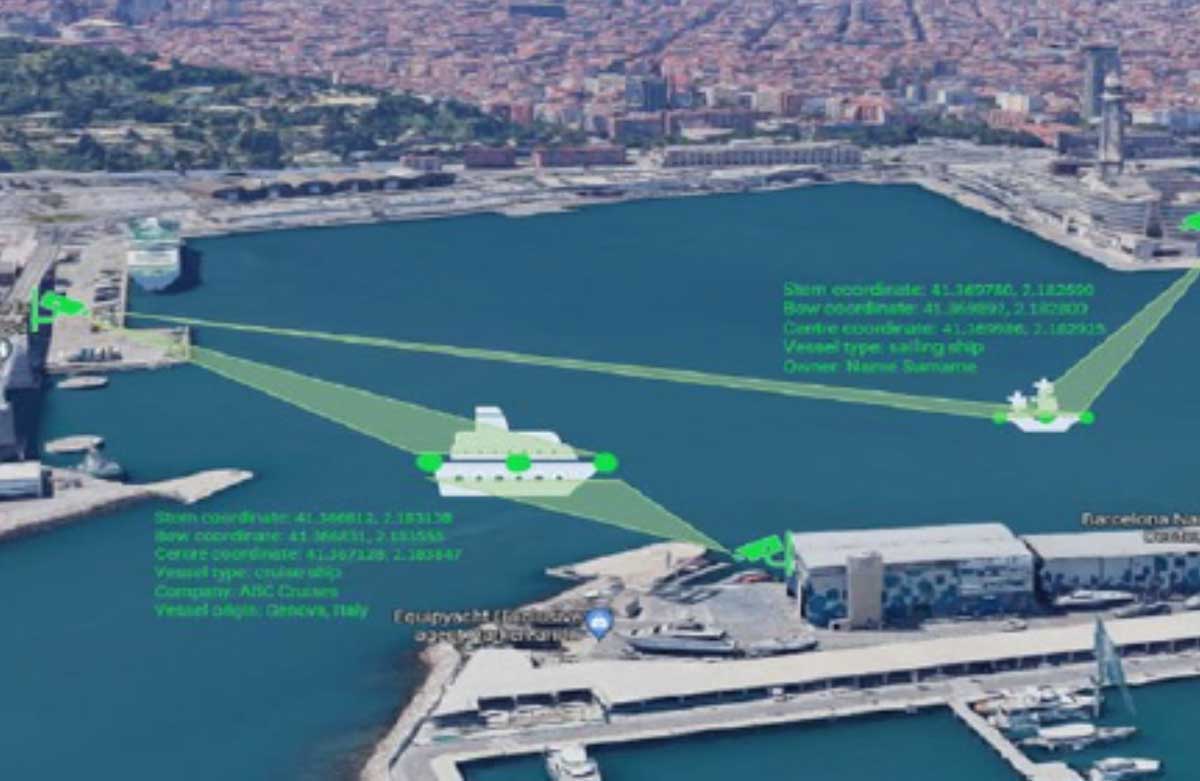
If a tenant wants to make use of the 5G service, the PA facilitates but the tenant contracts directly with Orange under the PA’s SLA. So the PA’s role has been to orchestrate the deployment yet does not act as a 5G service provider. This is an interesting model that other ports could also apply.
BEST container terminal
The group and the container terminal(s)
Here we were received by Graham Wilde, sales manager for the Three solutions group and Agustin Sanchez, IT manager for the container terminal. The Hutchison group is the owner of the BEST terminal and own over 50 (!) of these terminals and port operations worldwide. The Hutchison group also own Three, a mobile operator in some countries and Three Solutions, an integrator for telecom infrastructure and projects. The two subsidiaries act independently, as is demonstrated in Rotterdam where the group owns the ECT container terminal, who recently tendered the new 5G network and ended up contracting it to Huawei and not Three Solutions… Likewise, Three can provide networks to 3rd party ports not being Hutchison. Ports where Three Solutions has provided wireless networks are Felixstowe, Harwich, Thames port, Stockholm.

The market
Graham also provided us with some statistics on ports deployments of 4/5G. The port and terminal automation market in 2023 was around 4.5 bln $ and is expected to grow to 14 bln by 2030, a 14-18% annual growth. Already there are some 70 automated container terminals and the number grows rapidly. Internationally, Rotterdam (ECT) and Hamburg port (HHLA) are flagship projects. The Felixstowe deployment has stringent KPI’s:
- 99.9% coverage
- 5MB DL, 10 UL throughput
- <50 ms latency
The use for automated autonomous vehicles of many kinds in Felixstowe is massive:
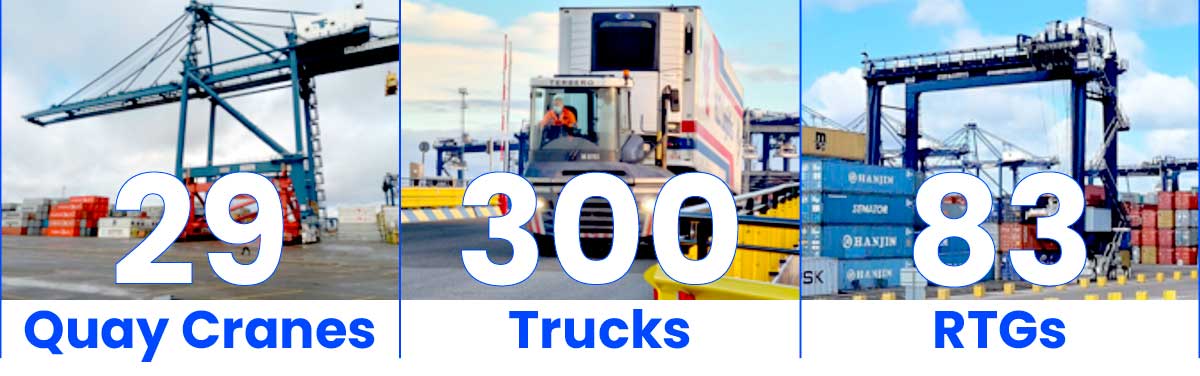
Wireless in the BEST terminal
It is interesting to note that BEST is a very recently build and very novel and highly automated terminal. Yet… they do not (yet) deploy private 5G. They have an extensive Wi-Fi network and make use of the 5G of the port authority (hence Orange) for some applications. Then again, they haven’t yet been able to internally justify the investment in its own 5G (as some Hutchison ports did). Reasons are
- The terminal is very new hence all quai and stacking cranes are equipped with fibre.
- The devices that can truly withstand the harsh operational requirements of a port crane on steel wheels are scarce
- Providers typically offer and commission a network as is, but to keep it up and running is very cumbersome for IT
- Suppliers underestimate the effect of operational disruption for installing equipment for 5G on a piece of equipment (for the installing of 5G kit, Agustin has to request an outage of a crane to operations and the answer may well be a ‘no’). To take cranes and RTG’s out of operation for servicing is a window only provided few times per year. Other than that, the terminal runs 365/24/7
- He DOES have some use cases that would require p5G, like:
- The reefer containers stack where temperatures have to be monitored remotely and the cost of malfunction are high
- Ambulant workforce
- Planned expansion of the terminal
Yet they do not yet add up to a viable business case…
disclaimer: these points on whether-or-not to deploy private 5G have been noted by the author of this article and aren’t direct statements from BEST spokesperson.
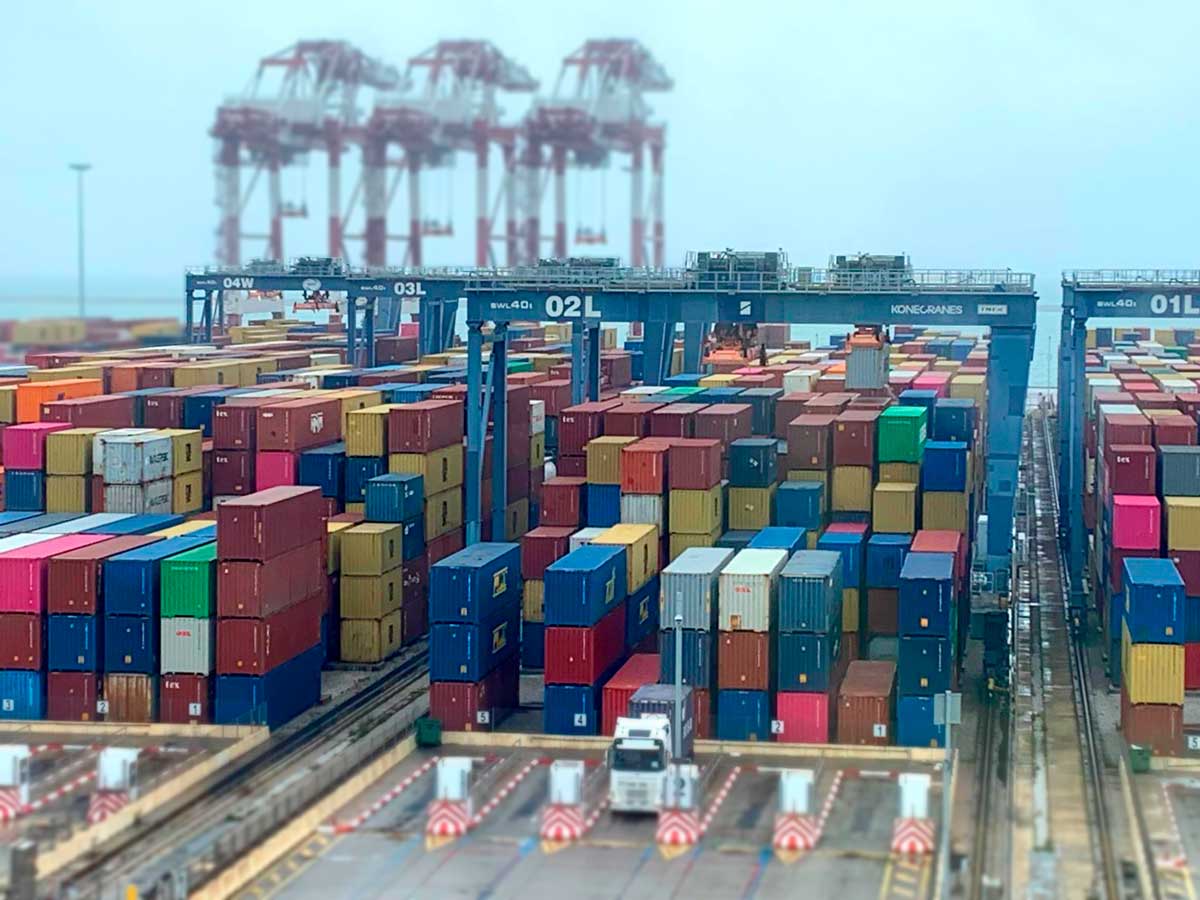
Photo; Quai cranes, stacking cranes, stacked containers, trucks all in one densely packed area
The visit was concluded with a tour of the terminal (in gusting wind and rain). The group was impressed by the level of activity and the density and accuracy of all displacements and crane movements. This is an operational site like no other!