
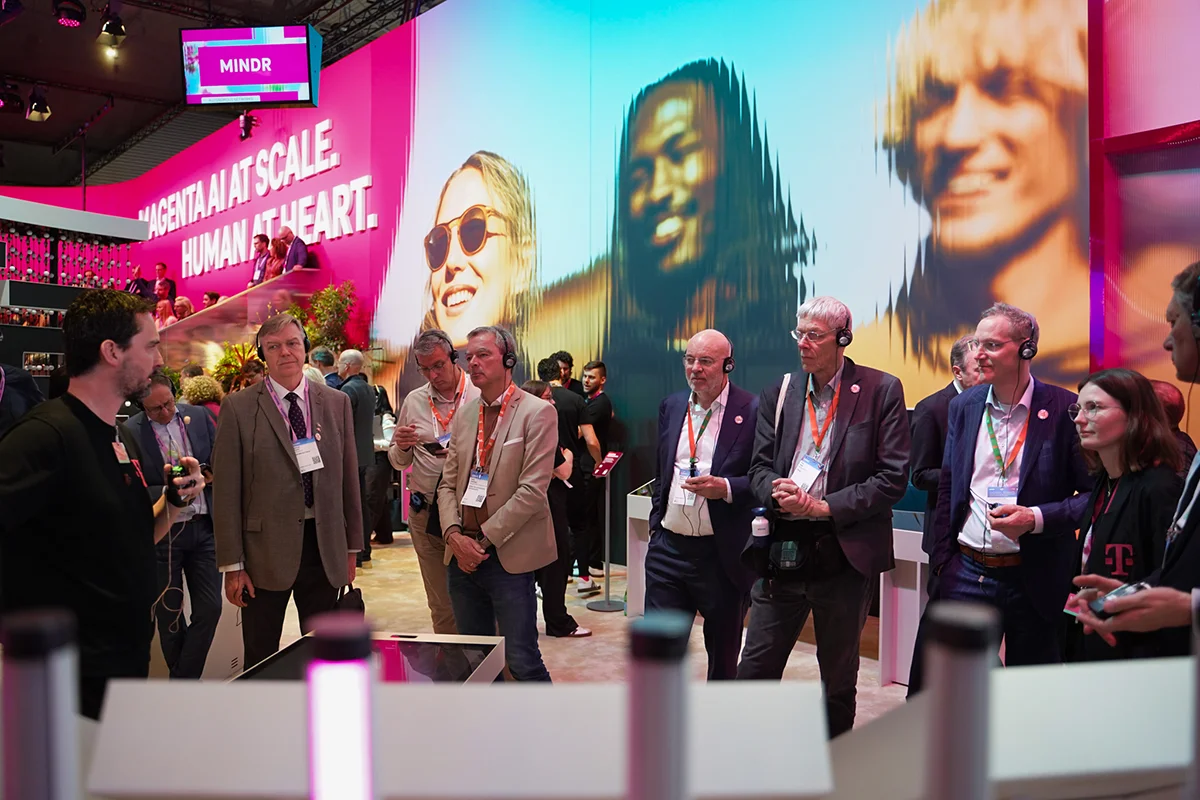
During MWC Barcelona 2026, Ecosystem Services organises – as part of the NL@MWC program – guided knowledge mission tours aimed at connecting participants with leading Dutch and international companies in connectivity and digital technologies. The tours focus on inspiration, knowledge exchange and networking in an informal setting. One of the knowledge missions is called Government & Innovation (from March 2 to March 4).
The themes of the visits were:
Future Networks & 5G/6G Innovation
From 5G Advanced to 6G, private networks and Future Network Services as the foundation for digital autonomy and economic growth.
AI, Data & Trusted Digital Infrastructures
Human-centric AI, data spaces, cybersecurity and trusted digital ecosystems for public and private applications.
Digital Sovereignty & European Tech Leadership
European cooperation, open standards, strategic autonomy and the role of government and innovation ecosystems.
From Innovation to Impact: Scaling & Deployment
Scaling innovation from pilots and living labs to large-scale deployment, sustainable business models and public-private collaboration.
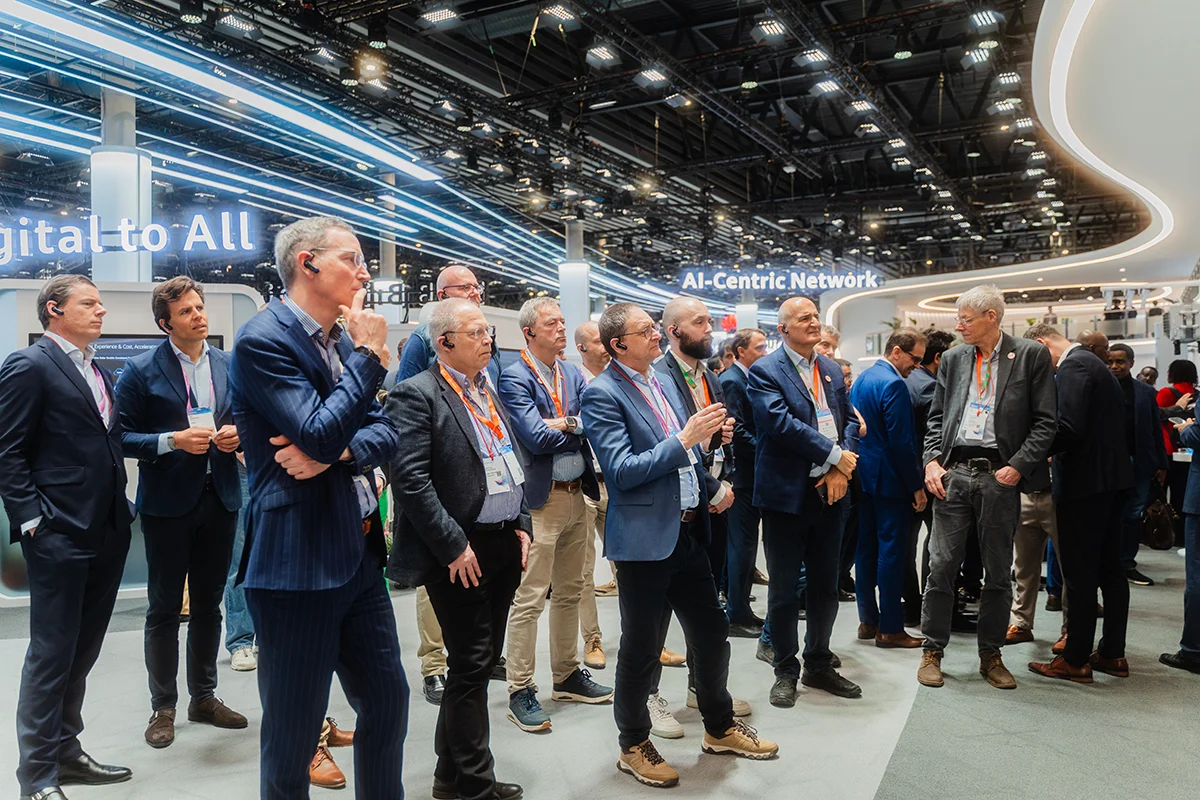
Monday, March 2
The tour started at the Netherlands pavilion with an introduction of the partners of the pavilion. Timing of the visits also allows participation in the NL talks. The NL talk of the morning was European Digital Autonomy.
GSMA pavilion, 4F30
The first visit was to the GSMA pavilion and provided a strategic perspective on the organization behind MWC and its central role in shaping global telecom standards, policy alignment, and industry collaboration.
There were 4 theme’s highlighted:
- Connected healthcare with National University Health Systems NUHS from Singapore.
Demonstrates how advanced connectivity enables remote monitoring, telemedicine, and data-driven care. The focus is on improving patient outcomes and operational efficiency through secure, real-time data exchange across healthcare systems. - GSMA Services & Intelligence (by GSMA)
Highlights data, insights, and tools provided to operators and ecosystem players to improve decision-making. This includes market intelligence, fraud prevention, and identity solutions that strengthen trust and efficiency across the mobile ecosystem. - Connected manufacturing with Capgemini, Verizon and Nokia
Showcases how private 5G networks and edge computing enable smart factories with real-time control, automation, and predictive maintenance. These solutions enhance productivity, flexibility, and resilience in industrial operations. - Remote driving/quality on demand with Elmo
Demonstrates how ultra-reliable low-latency connectivity enables remote control of vehicles and machines. This supports use cases such as teleoperation in logistics, safety-critical environments, and on-demand mobility services. At the stand you could remotely drive a car. The record speed established was 150 km/hour.
Next stop was at Deutsche Telekom (3M31)
The key theme at Deutsche Telekom was “Magenta AI at Scale. Human at Heart”. We visited several demo’s and presentations:
- AI-Powered Communication (Magenta AI Call Assistant)
Deutsche Telekom showcased a network-integrated AI assistant that enhances phone calls with real-time translation, summaries, and task execution. The key innovation is that AI is embedded directly into the network—no apps or devices required—making advanced capabilities accessible at scale. - AI Beyond the Smartphone (AI Glasses & Ambient AI)
A concept of AI glasses illustrated a shift toward hands-free, voice-driven interaction where digital services are seamlessly integrated into daily life. This points to a future where the network becomes the interface, not the device. - Secure Digital Identity (Mobile.ID)
Telekom presented a mobile identity solution turning smartphones into a “universal key” for access, authentication, and verification. This reinforces the role of telecom operators as trusted identity providers in digital ecosystems. - AI-Native Networks & Automation
A strong focus was on autonomous networks that dynamically adapt to demand using AI (e.g., optimizing capacity during events). This signals a transition toward self-managing, intent-driven networks as a foundation for future services. - European Cloud & Digital Sovereignty (Industrial AI Cloud & Edge Continuum)
Telekom highlighted sovereign cloud and edge infrastructure in Europe, including a federated “European Edge Continuum” across multiple operators. The emphasis is on enabling scalable AI and data services while maintaining European control over data and infrastructure.
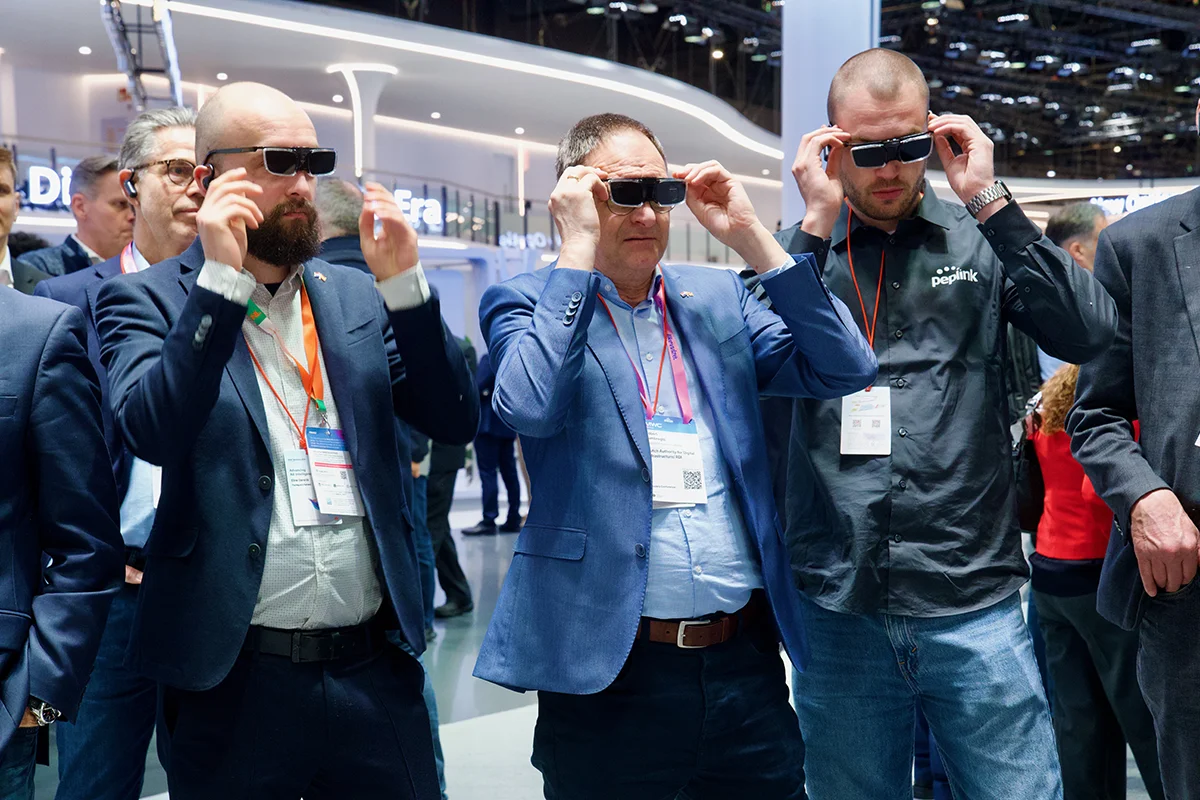
Tuesday, March 3
KPMG
The KPMG-led AI Nexus session (as part of the GSMA congress program) positioned AI as a strategic transformation driver, moving beyond hype into execution. The overarching message: organizations that combine technical capability, trust, and clear business focus will define the next phase of the AI-driven economy.
Deloitte
Deloitte presented digital sovereignty through an interactive demo table that visualized how data, cloud, and infrastructure choices impact control, compliance, and resilience. The hands-on setup made abstract concepts tangible, showing how organizations can design sovereign digital architectures across jurisdictions, providers, and technology layers.
You can download their white paper here.
NL startups at 4YFN in Hall 8.1
The Dutch presence at 4YFN – organised by InnovationQuarter – included a diverse group of 16 startups, such as:
- Aircision – high-capacity wireless connectivity solutions
- ANTENNEX – advanced antenna systems for telecom
- EduvolutionX – AI-driven learning solutions
- Husense – sensing and monitoring technologies
- Logichainge – digital supply chain optimization
- QSA Technology – quantum-safe cybersecurity solutions
- Zander Labs – brain-computer interface applications
- Yookr – data-driven logistics insights
Together, they represent a mix of connectivity, AI, quantum, neurotech, and data platforms, illustrating the breadth of Dutch innovation
Business France, 13.30, hall 5.
Business France is one of the larger country pavilions with which we work closely together. They are situated in Hall 5 and a selection was made of the participants to be visited.
- Twake.ai
Twake.ai showcased a sovereign, open-source AI collaboration platform designed to provide European alternatives to Big Tech productivity tools. The focus was on secure, privacy-first generative AI integrated into everyday workflows such as messaging, document handling, and team collaboration. - Firecell
Firecell, now merged with Accelleran, presented a combined Open RAN and private 5G solution targeting enterprise and industrial networks. The joint offering highlights flexibility, software-driven deployment, and European alternatives in the evolving telecom infrastructure stack.
Nokia and KPN
Nokia demonstrated how AI is embedded into network operations to enable automation, optimization, and predictive maintenance. A live 5G environment with KPN and Cordis illustrated real-world deployment, showing how operators can use AI to improve performance and customer experience. KPN Campus phrases this private 5G development as ‘local queryable AI Istructure’. See also Mission critical enterprise demo | #MWC26 on YouTube
AWS
Amazon Web Services positioned itself as a key enabler of telecom transformation through cloud, edge, and AI services tailored for operators and enterprises. Their large presence underscored the growing role of hyperscalers in the telecom ecosystem, particularly in running networks, data platforms, and AI workloads at scale.
Some participants also visited Amazon Leo (former: Project Kuiper) in Hall 2.1. Here the various CPE were shown and a comprehensive overview of this new LEO constellation of Amazon was followed by a lively Q&A.
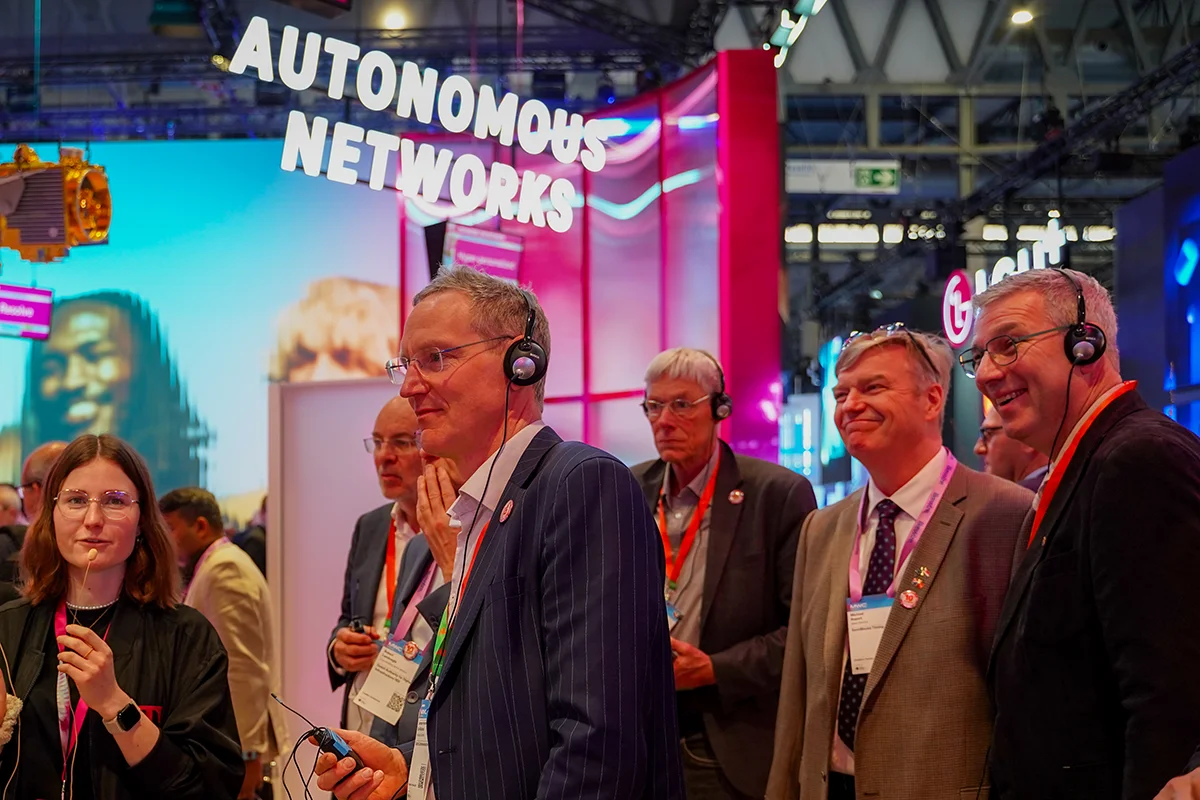
Wednesday, March 4
Estonia
The Estonia pavilion (Hall 7) brought together a curated group of companies covering telecom, AI, identity, and digital services, including:
- 1oT – eSIM-based global IoT connectivity platform
- B.EST Solutions – quantum-ready mobile identity solutions
- Boku – carrier billing and global payment infrastructure
- Mobi Lab – advanced mobile and AR solutions
- Narayana – secure and alternative telecom services
- Apifonica – AI-driven voice and communication automation
- Teliqon – global communication and connectivity tools
- e-Residency Estonia – digital identity enabling global entrepreneurship
Estonia presented itself not just as a country pavilion, but as a coherent digital ecosystem, combining government, startups, and infrastructure into a unified story. The key takeaway is that Estonia’s value lies in integrating policy, technology, and trust into deployable digital solutions at global scale.
Huawei
As every year Huawei impressed us with their booth and the display of innovations that make the telecom operator networks even more powerful and more sustainable. The integration of multiple frequency bands in combination with active antenna technology was impressive to see. On the sustainability side the deep sleep technology with only 10 watts usage was combined with the higher usage of Green energy through the use of new materials and intelligent battery management of the local energy storage.
SES
After the lunch we visited SES that gave us an impressive insight into the developments in Satellite networks with their multi-orbit approach, combining LEO (low earth orbit), MEO (middle earth) and GEO (geostationary) satellites. As in 2025, a special session was organised in cooperation with CENS (connectivity ecosystem North Sea) to update on maritime/sea connectivity from satellites.
The highlight was the introduction of the Lync offering that offers limitless coverage with roaming capabilities when a device gets out of reach from the regular telecom networks on earth.
Ericsson
The Ericsson booth showed very interesting use cases of Private 5G Networks and you can see that their focus is now also to cover this market development. The Dual use of network technology has also been explained to enable for instance drone detection with a wireless network. On the technology side the demo of Multi-Radio Spectrum Sharing was impressive to see in the live demonstration. With this technology, 6G can be introduced next to 5G in the same frequency band in a very efficient way with little overhead.