
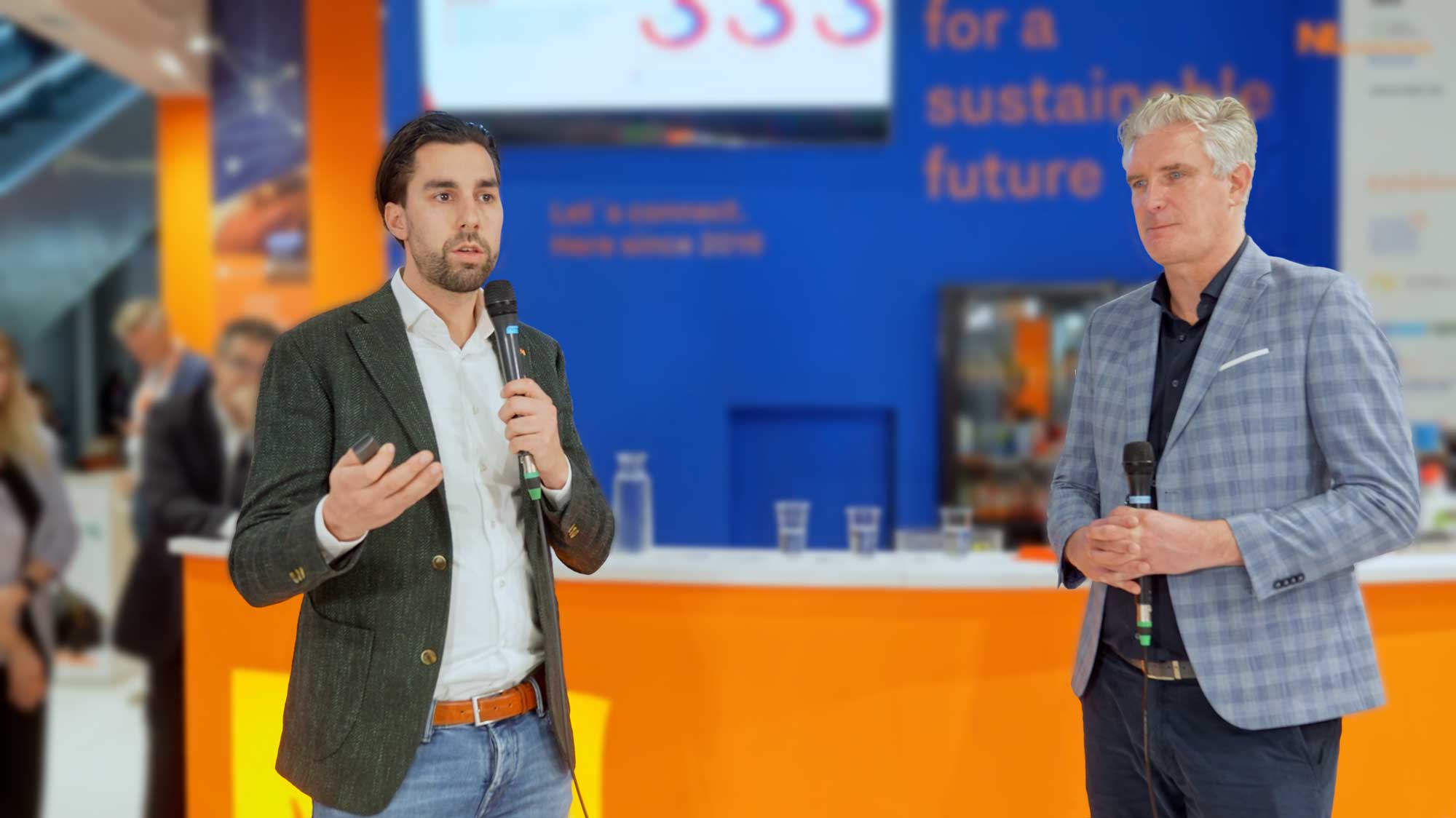
At the Netherlands Pavilion during Mobile World Congress Barcelona 2026, representatives Gerard de Boer and Jorth Pieterson from CEVA Logistics outlined the growing importance of device-as-a-service (DaaS) models in the IT hardware market, with a particular focus on sustainability and supply chain optimisation.
Speaking during an NL Talks session moderated by Anke Kuipers, Jorth Pieterson and Gerard de Boer discussed how logistics is becoming a key differentiator in enabling circular device ecosystems.
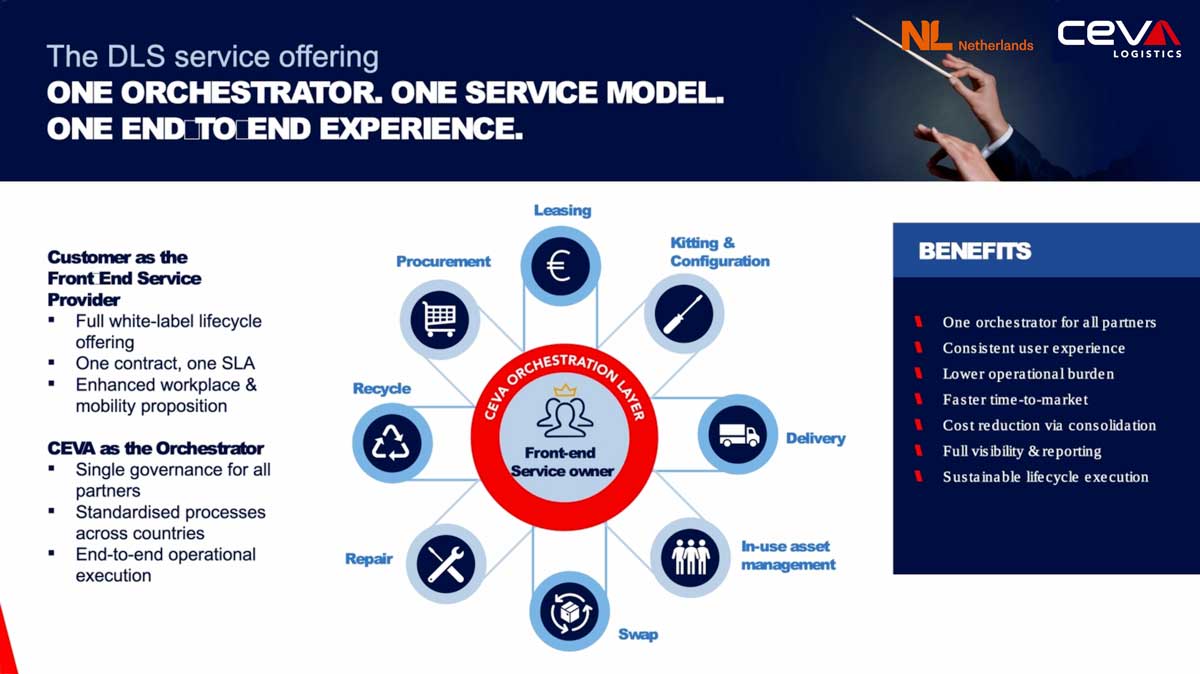
Rapid growth in device-as-a-service
According to CEVA Logistics, the market for IT devices delivered through service-based models has expanded rapidly in recent years, driven by demand for flexible financing, lifecycle management and sustainability.
The Jorth and Gerard cited strong growth in the devices-as-a-service segment, with enterprises increasingly moving away from ownership models towards subscription-based approaches that bundle hardware, services and lifecycle management.
This shift is supported by enterprise demand for predictable costs, improved uptime and reduced operational complexity, particularly in large-scale deployments of smartphones, laptops and desktops.
Addressing device lifecycle inefficiencies
A key challenge highlighted during the session is the inefficient use and disposal of IT devices. CEVA Logistics estimates that a significant share of devices remains unused after initial deployment, while a large proportion is not formally recycled.
These inefficiencies contribute to increased carbon emissions and underutilisation of valuable hardware resources.
DaaS models aim to address this by enabling structured return, refurbishment and redeployment processes, extending product lifecycles and reducing environmental impact.
Logistics as a core enabler
CEVA Logistics emphasised that logistics plays a central role in unlocking the full value of DaaS models.
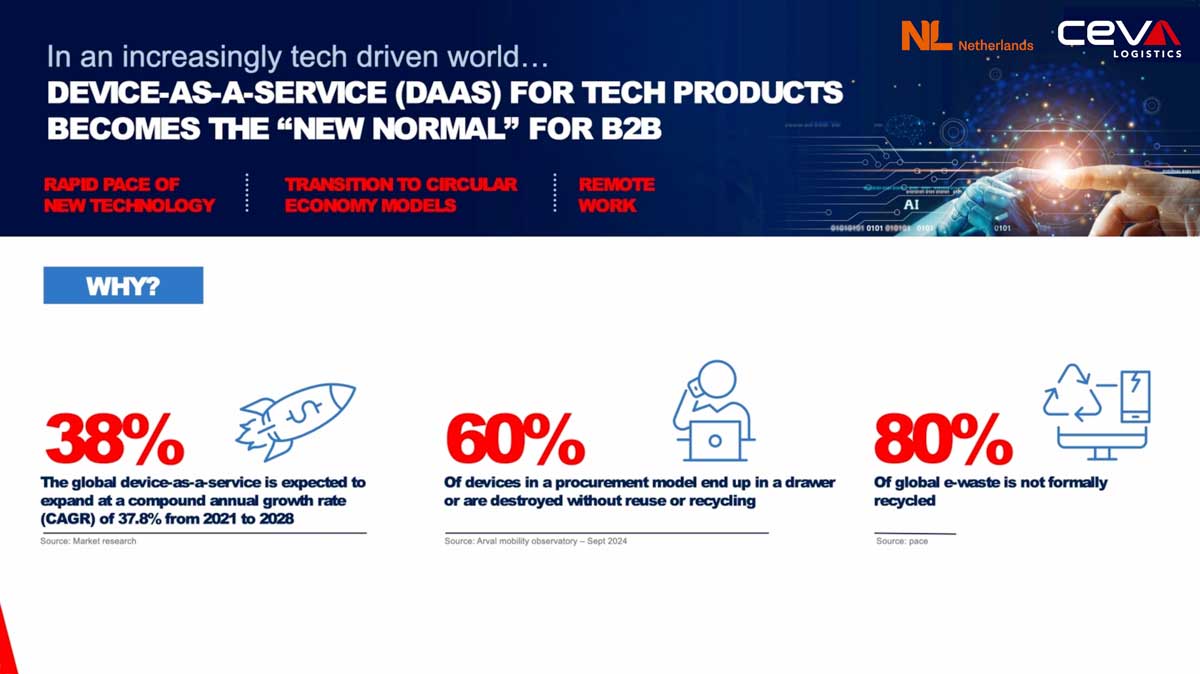
Rather than focusing solely on financing or device provisioning, the company highlighted the importance of managing both forward and reverse logistics flows, including procurement, deployment, in-use management and end-of-life handling.
Through a central orchestration layer, CEVA integrates multiple stages of the supply chain, enabling more efficient device tracking, reuse and remarketing.
This approach supports cost optimisation, improved user experience and lower carbon footprints, according to the company.
Sustainability gains through circular models
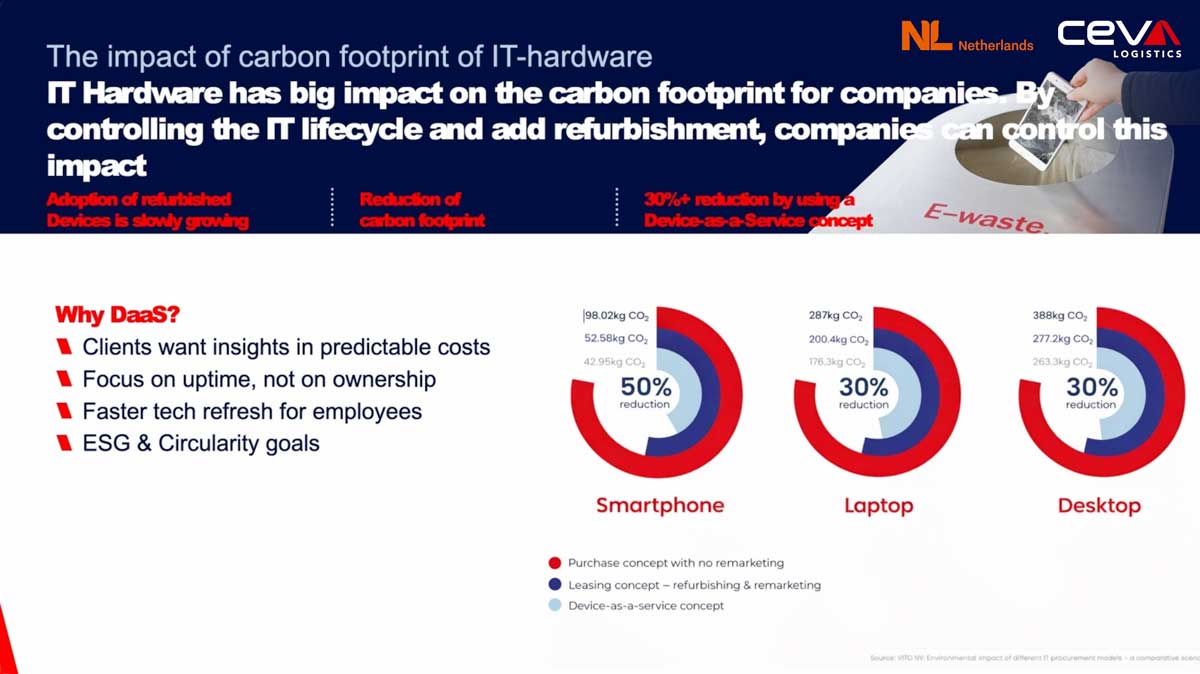
Gerard pointed, that measurable sustainability benefits from adopting circular device models. Reuse and remarketing of devices can significantly reduce carbon emissions compared to traditional ownership or leasing models.
For example, extending device lifecycles through multiple use cycles can lead to substantial reductions in emissions for both smartphones and computing devices.
The shift aligns with increasing ESG requirements among enterprises and telecom operators, which are placing greater emphasis on sustainable procurement and lifecycle management.
Ecosystem collaboration key to adoption
CEVA Logistics also highlighted the importance of partnerships across the value chain, including telecom operators, device manufacturers and service providers.
The Netherlands Pavilion itself was cited as an example of this ecosystem approach, bringing together companies involved in different parts of the device lifecycle.
“Partnership is key to enabling these services at scale,” the speakers noted, pointing to ongoing collaboration with telecom providers to deliver integrated DaaS solutions.
Expanding engagement at MWC
The company is participating at the Netherlands Pavilion for the first time, using MWC Barcelona 2026 to engage with customers, partners and new market opportunities.
According to CEVA Logistics, the event provides a platform not only for business development but also for gaining insights into emerging trends and potential collaborations in the evolving IT hardware and telecom ecosystem.